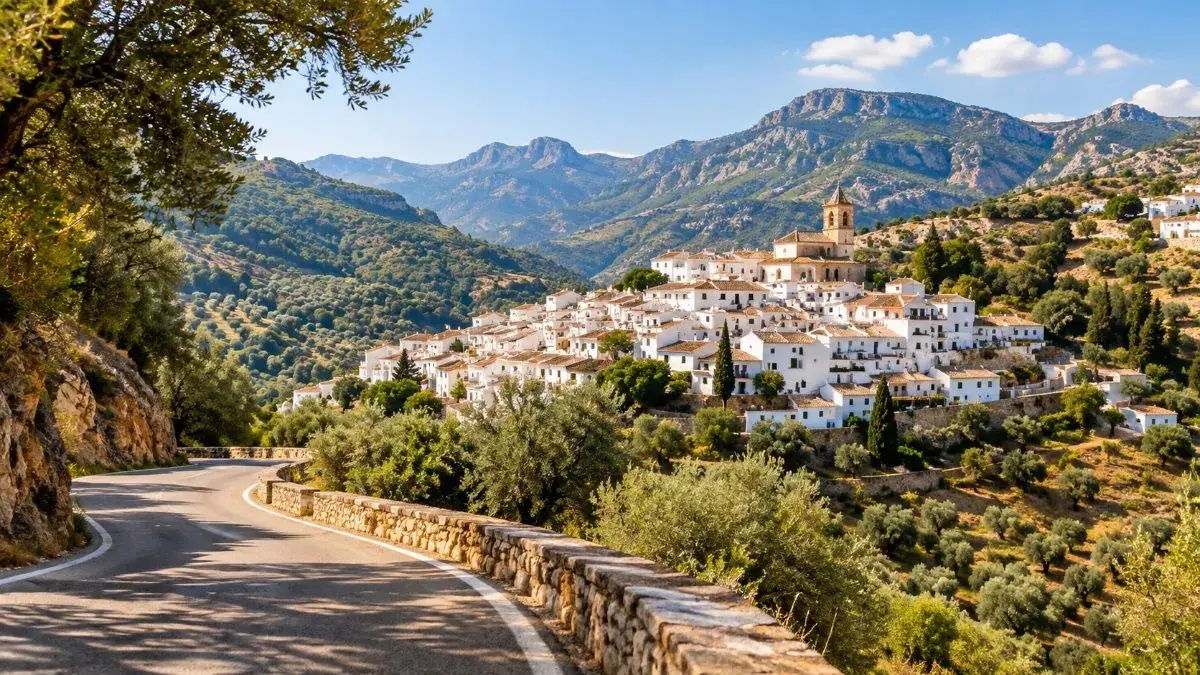

Booking choice: The Caminito del Rey guided tour, 7 hours. Book this Tour details
Three full days is enough for the city of Málaga. That covers the Alcazaba and Gibralfaro, the cathedral, the Picasso Museum, a market morning, an afternoon on the beach and a few long evenings of tapas. Then add one day for every trip out of town you want. The Caminito del Rey, Ronda, Granada and Nerja each take a whole day.
Below: how much fits into one to seven days, the ten sights we would put first, a three-day plan built around the opening hours, and when it pays to stay longer. Hours come from the official pages of the Alcazaba and Gibralfaro, the Picasso Museum and the Roman Theatre.
The quick answer
Two days for a first look, three for the city at an easy pace, four to five with one or two day trips. A week lets you use Málaga as a base for the Caminito del Rey, Granada, Ronda and Nerja without rushing. Put the Alcazaba on a Sunday afternoon if you want it free.
How many days in Malaga is enough?
Three days for the city itself. Four to five days if you add day trips, which is what most visitors to Málaga end up doing.
The historic centre is compact and mostly pedestrian, so you lose little time getting about. What eats your days is everything outside the city. Here is what each length of stay buys you.
| Stay | What fits | What you leave out |
|---|---|---|
| 1 day | Roman Theatre, Alcazaba, cathedral, Calle Larios, tapas at night | Museums at an easy pace, the beach, any day trip |
| 2 days | Add the Picasso Museum, Atarazanas market, Gibralfaro and La Malagueta beach | Day trips |
| 3 days | The whole city at an easy pace, with a sunset on the water | Granada, Ronda, the Caminito del Rey |
| 4 to 5 days | The city plus one or two day trips | A slow beach day, if you take two trips |
| 7 days | The city, three or four day trips and time on the beach | Very little |
Short on days? Start with the old town on foot: two hours with a local guide, from the Alcazaba to the Alameda.
Book thisWhat are 10 things to see in Málaga?
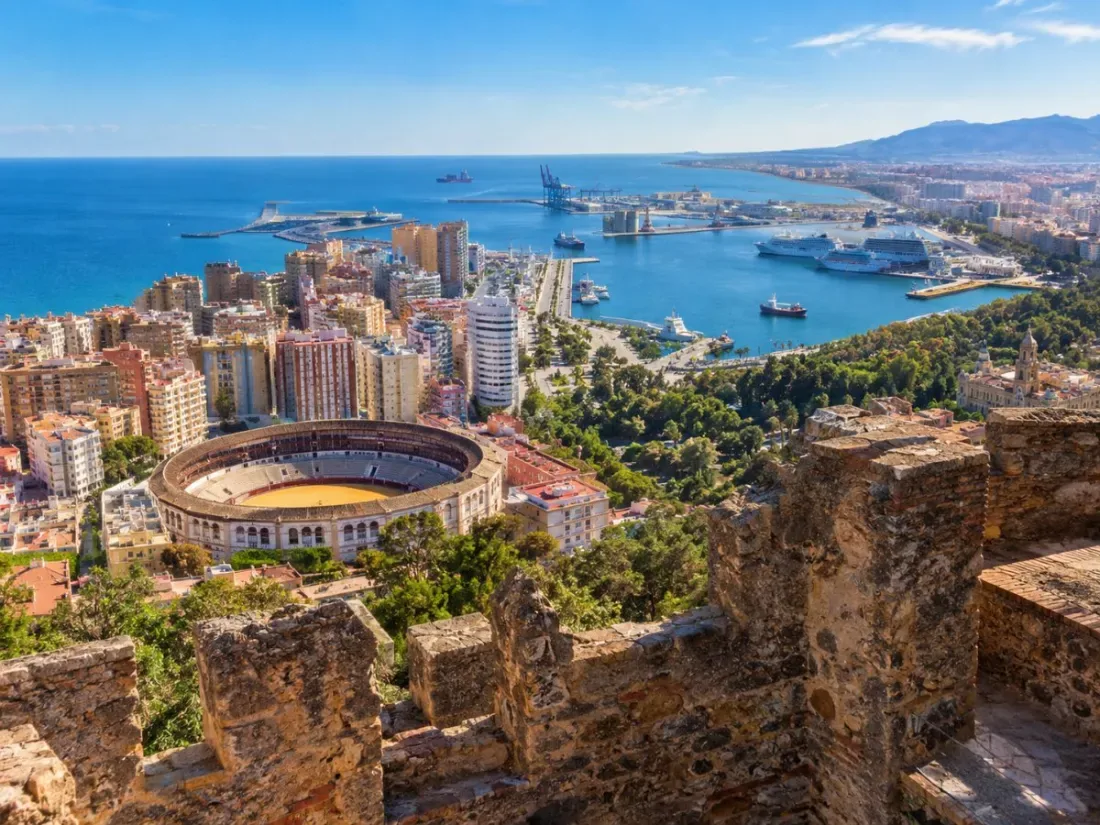
The Alcazaba, Gibralfaro, the Roman Theatre, the cathedral, the Picasso Museum, Atarazanas market, Calle Larios, Muelle Uno, La Malagueta beach and the Soho murals. All ten fit into three days.
- The Alcazaba: the Moorish palace-fortress above the old town, with courtyards, fountains and orange trees.
- Gibralfaro: the 14th-century castle on the hill above, joined to the Alcazaba by a walled passage, the Coracha.
- The Roman Theatre: built under Augustus, found again in 1951 and free to enter.
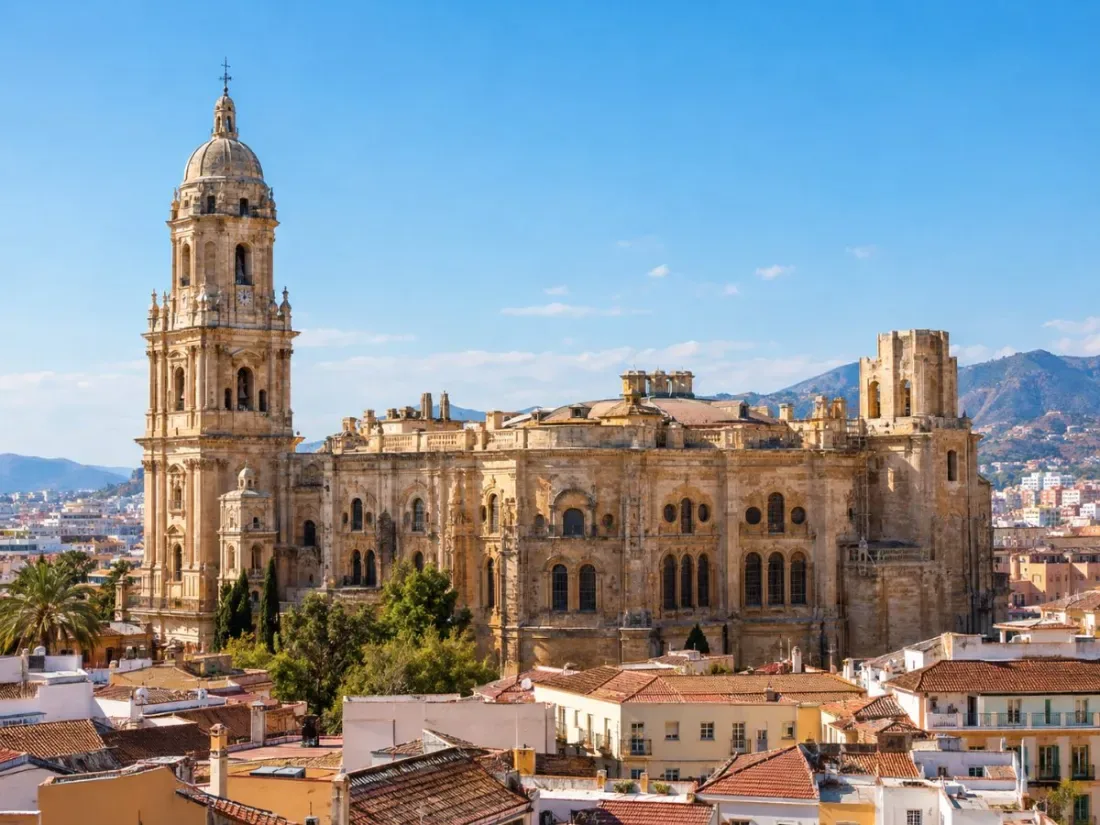
- The cathedral: nicknamed La Manquita, the one-armed lady, for its unfinished south tower. Climb to the roof if you can.
- The Picasso Museum: in the Palacio de Buenavista, a few streets from the square where Picasso was born.
- Atarazanas market: fish, fruit and a stained-glass window under an iron roof, behind a Nasrid arch.
- Calle Larios: the pedestrian shopping street from Plaza de la Constitución to the Alameda.
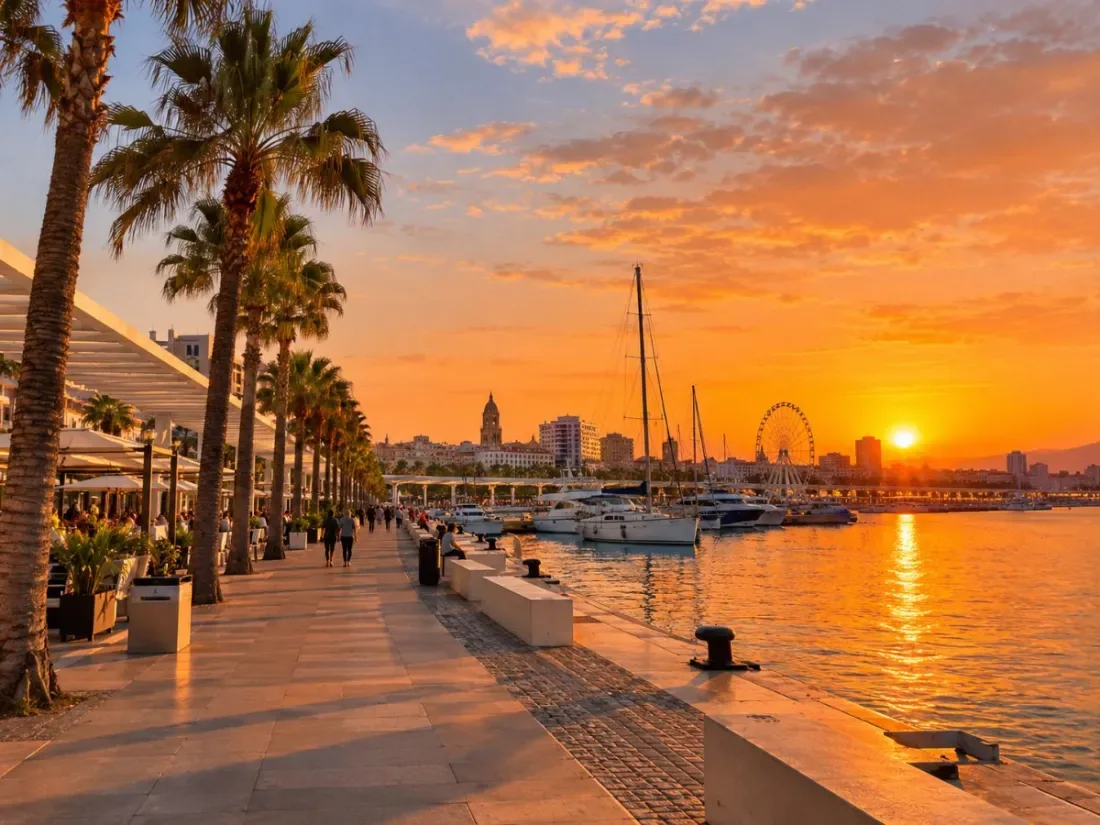
- Muelle Uno: the port promenade, with the Centre Pompidou's coloured cube at its end.
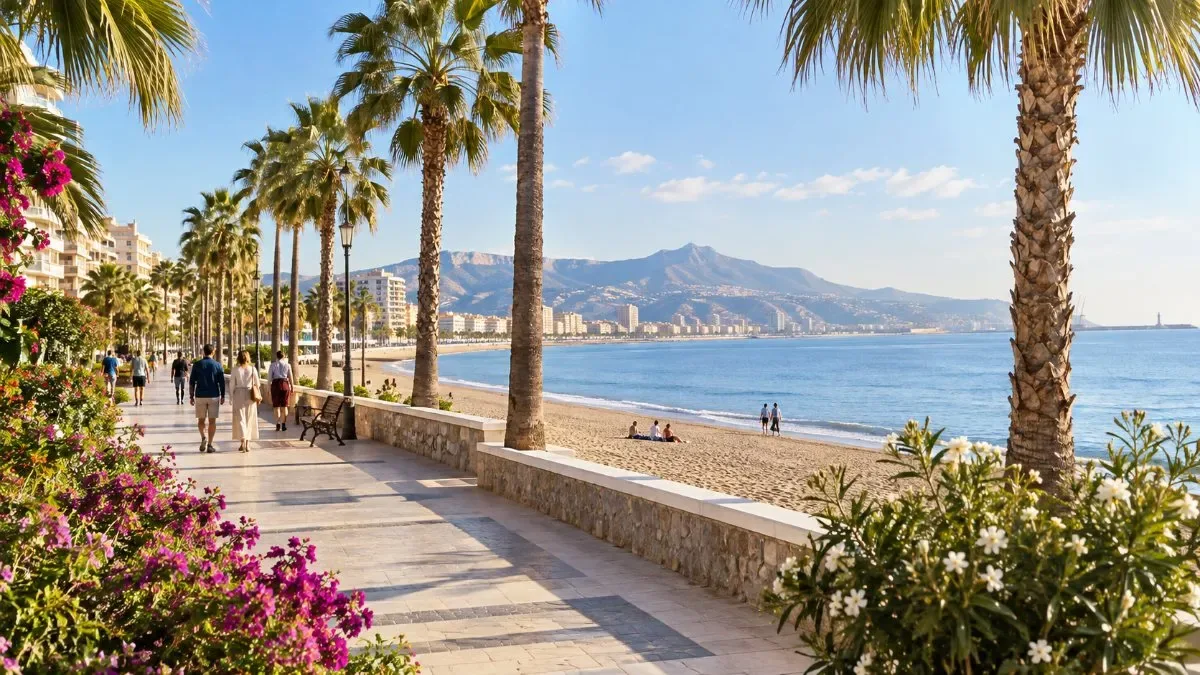
- La Malagueta: the city beach, a short walk east of the centre.
- Soho: the arts district between the river and the port, painted by the MAUS street-art project.
For an eleventh, give a full day to a trip out of town. The day trips guide compares them.
What is the main attraction in Malaga?
The Alcazaba, the Moorish palace-fortress above the Roman Theatre. It is the one sight that explains what Málaga was for most of its history.
The official history first mentions the Alcazaba in 755. Its palace-fortress dates from the 11th century, and Badis, the Zirid ruler of Granada, added a double wall after 1056. In the 14th century Yusuf I built Gibralfaro castle on the hill above and linked the two with the Coracha, a walled passage.
From April to October the Alcazaba opens 09:00 to 20:00, and from November to March 09:00 to 18:00, with last entry an hour before closing. Entry is free for everyone on Sundays from 14:00, according to the official site, which notes that this is the current rule. A combined ticket covers Gibralfaro too.
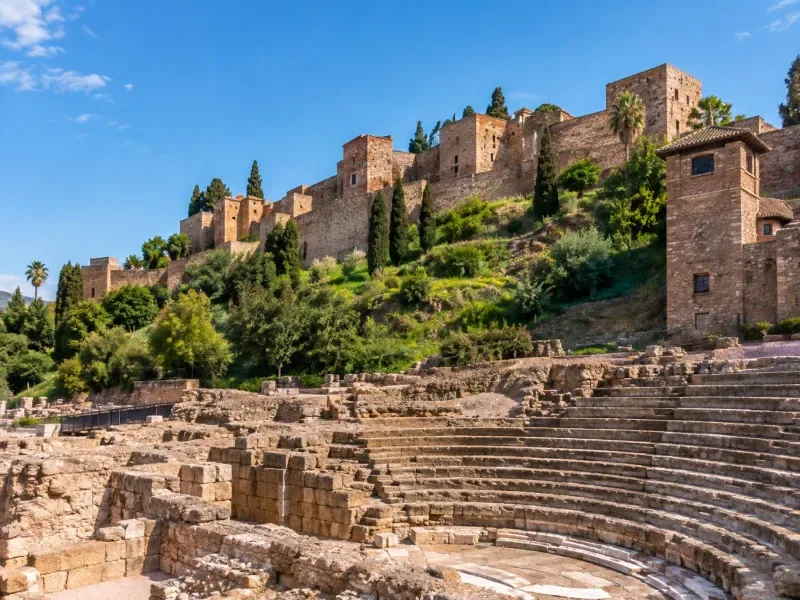
The Roman Theatre, then the Alcazaba with a guide and the entry ticket. The tour ends inside, so you can stay on as long as you like.
Book this Tour detailsWhat does a 3-day Málaga itinerary look like?
Day one for the old town and the Alcazaba, day two for Picasso, the market and the beach, day three for Gibralfaro, Soho and the port at sunset.
The order matters more than it looks. The Roman Theatre closes on Mondays, Atarazanas market keeps morning hours from Monday to Saturday, and three of the big sights are free on Sunday afternoons. Plan around those and you save both queues and entry tickets.
| Day | Morning | Afternoon | Evening |
|---|---|---|---|
| Day 1 | Old town on foot: Plaza de la Merced, the Roman Theatre, the cathedral | The Alcazaba (free on Sundays from 14:00) | Tapas around Calle Larios |
| Day 2 | Atarazanas market (closed Sundays), then the Picasso Museum | La Malagueta beach | A flamenco show in the centre |
| Day 3 | Climb to Gibralfaro, then the cathedral roof | Soho murals and Muelle Uno | Sunset from the water, or espetos in Pedregalejo |
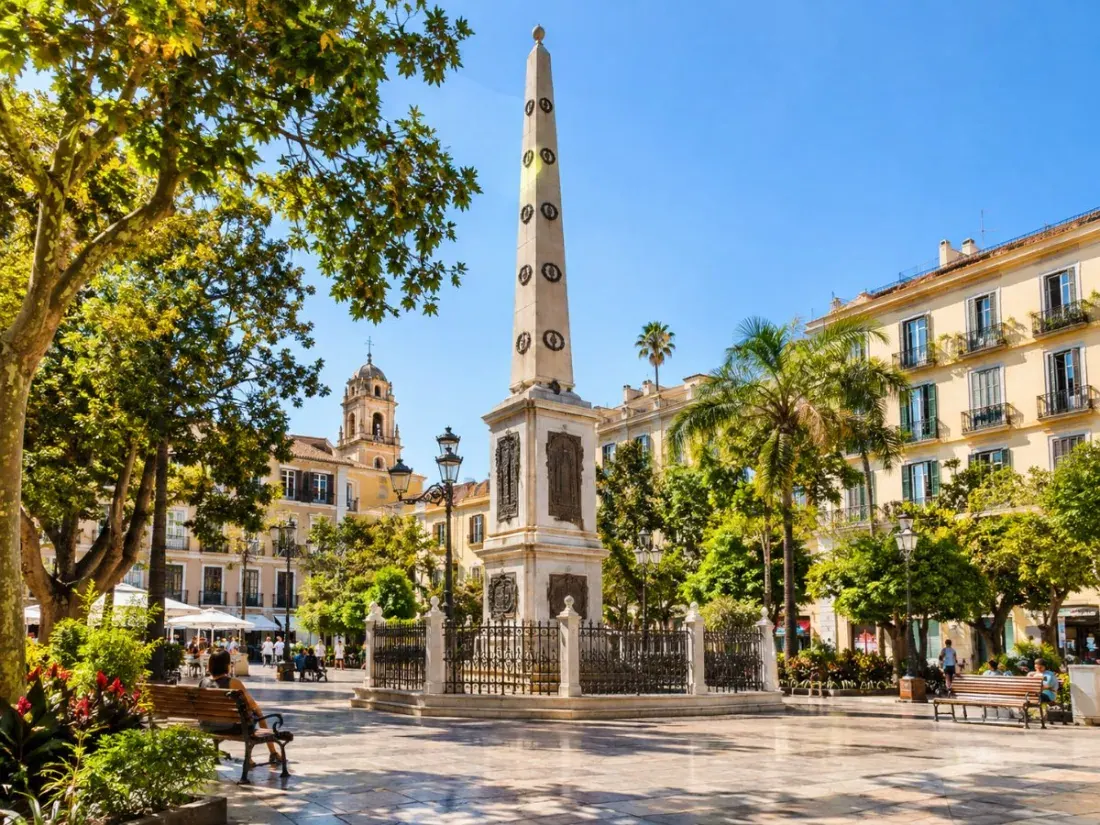
Is Malaga a walkable city?
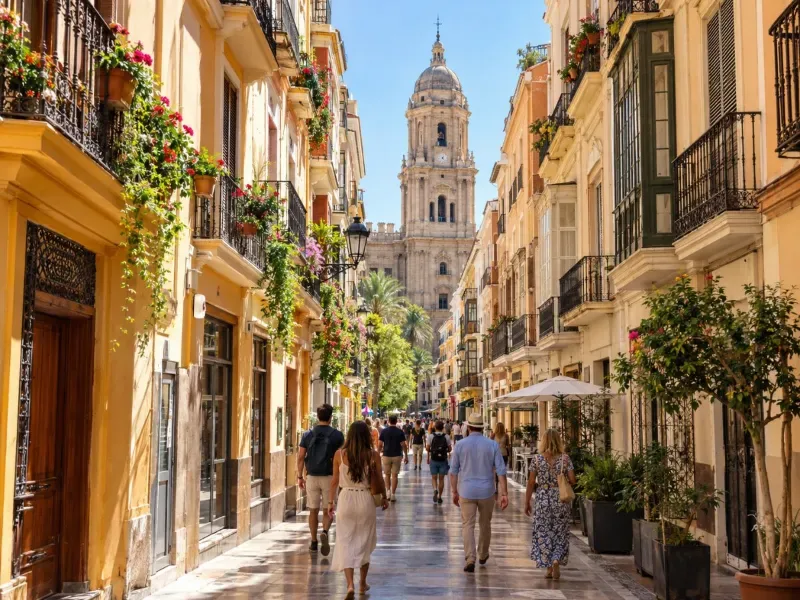
Yes. The old town is small and mostly pedestrian, and the port, the beach and the Alcazaba sit on its edge. You need transport only for the airport, the station and the eastern beaches.
Calle Larios has been closed to traffic since 2002, and most of the lanes around it are pedestrian too. The one real climb is the path up to Gibralfaro: steep, sunny and best done in the morning.
From the airport, the C1 commuter train reaches María Zambrano station in about 8 minutes and Centro-Alameda, at the end of the line, in about 12. Take trains towards Centro-Alameda, not Fuengirola. The metro has two lines and reached Atarazanas, by the market, in 2023. For Pedregalejo and El Palo, take a city bus east along the coast.
Your first evening: the skyline from the water, listed at 90 minutes at sunset (one hour in December and January).
Book thisIs Malaga cheap or expensive?
Good value for a Spanish city, with a long list of free sights. Old-town hotels in July and August are the main exception.
You can fill a whole Sunday without paying for entry: the Roman Theatre is free on every day it opens, the Alcazaba and Gibralfaro are free from 14:00 on Sundays, and the Picasso Museum is free in its last two hours on Sundays. The beaches, the Paseo del Parque, the Gibralfaro viewpoint and the Christmas light show on Calle Larios cost nothing either. The old town guide lists every free window.
Where the money goes: rooms in the centre in high summer, which rise sharply in July and August according to this neighbourhood guide, and the day trips, which are the biggest single spend for most visitors. Málaga had no tourist tax in October 2026, only a proposal: see the tourist tax post.
What is Malaga best known for?
Picasso, the Alcazaba, the beaches of the Costa del Sol and its sweet wine. For many travellers it is also simply the airport for the whole coast.
Phoenicians from Tyre founded the city as Malaka around 770 BC, which makes it one of the oldest cities in Europe. Today it has about 600,000 people, second in Andalucía after Seville, according to Wikipedia.
Picasso was born here in 1881, and the museum in his name opened in 2003. The city is also known for espetos, sardines grilled on the beach, for its Holy Week processions, for the August Feria and for a coffee-ordering system all of its own. The food guide explains the coffee.
How many days do you need for day trips from Málaga?
One full day each. The coach tours on this site run from 7 to about 11 hours, so plan an easy evening after each one and avoid stacking two in a row.
- Caminito del Rey: 7 hours on the listing, with about 3 hours on the path. The path is closed on Mondays.
- Ronda and Setenil and Nerja and Frigiliana: 9 hours each.
- Granada and the Alhambra and Córdoba: 10 hours each. The Granada tour is non-refundable, so book it only once your dates are fixed.
- Gibraltar: about 11 hours, back around 7 pm. Carry a passport, or an EU/EEA/Swiss national ID card.
With five days, we would take the Caminito del Rey and one of Granada or Ronda. With a week, add Nerja and keep a free day for the beach.
The day trip most visitors book first: the Caminito del Rey, with the coach, the entry ticket and an official guide.
Book thisFrequently asked questions
What should I not miss in Malaga?
The Alcazaba and Gibralfaro, the Roman Theatre, the cathedral, the Picasso Museum and an evening of tapas in the old town. Outside the city, the Caminito del Rey is the trip most visitors book first.
Is one day in Málaga enough?
For a cruise stop or a stopover, yes: walk the old town, see the Roman Theatre and the Alcazaba, and eat on Calle Larios. You will miss the museums and the beach.
Is a week in Málaga too long?
No. The city fills three days, and Málaga is the easiest base for day trips to the Caminito del Rey, Granada, Ronda, Nerja, Córdoba and Gibraltar.
What is the best day for the Alcazaba?
Sunday after 14:00 if you want free entry, which the official site lists as the current rule. Any other day, go at 09:00 opening, before the heat and the cruise groups.
Ready to book
Choose your tour
Free cancellation up to 24 hours before on every option here. Check the live listing for your date.
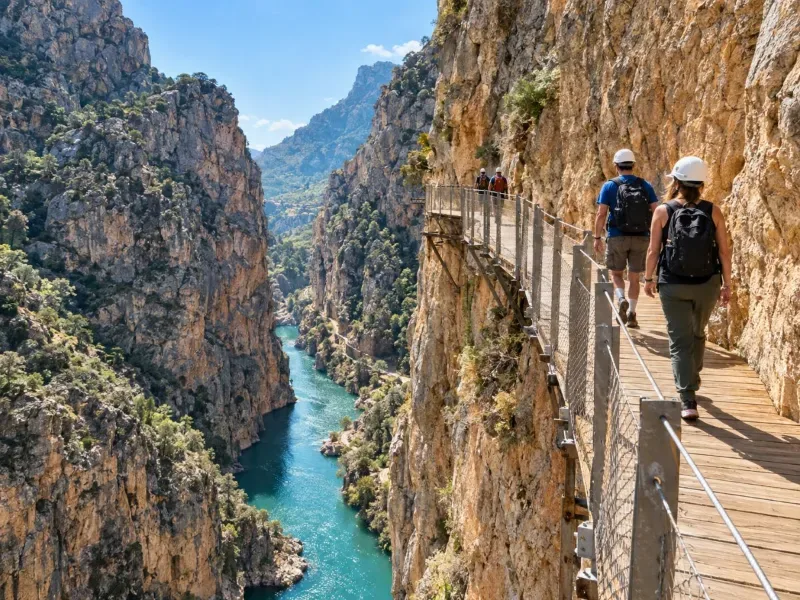
Caminito del Rey Guided Tour from Málaga
- Direct coach from central Málaga and back
- Caminito del Rey entry ticket and helmet
- Official Caminito guide, groups by language
Alcazaba & Roman Theatre Guided Tour
- Guided walk from the Roman Theatre into the Alcazaba
- Alcazaba entrance ticket
- Group fast-track entry